Every great economic hub in the world was once just a city with potential. Dubai was a fishing village sixty years ago. Singapore was a colonial port with no natural resources. Shenzhen was a small town bordering Hong Kong before China designated it a special economic zone and changed everything.
What transformed each of them was not luck. It was targeted capital, deliberate policy, and geographic logic arriving at the same moment.
Pakistan has several cities sitting at exactly that intersection right now. If Gulf capital flows in with the right structural support, any one of them could define Pakistan’s economic geography for the next generation.
Here is the honest assessment of which cities have the strongest case — and why.
Islamabad: The Capital Ready to Become a Financial Hub
Islamabad is Pakistan’s most obvious candidate for transformation into a genuine regional financial and business center. The infrastructure foundation is already there — the best road network in the country, Pakistan’s most modern international airport, reliable utilities relative to other Pakistani cities, and a concentration of educated professionals that no other Pakistani city can match.
What Islamabad currently lacks is the commercial density and financial services ecosystem that would make it a credible destination for Gulf institutional capital. The city is a government town that has never fully converted its administrative concentration into economic dynamism.
Gulf capital changes that calculus specifically because the investment formats most aligned with GCC strategy — financial services, technology, real estate development, and professional services — are precisely the sectors that Islamabad’s existing talent base and infrastructure can support.
A purpose-built financial free zone on Islamabad’s periphery — modeled on Dubai’s DIFC — would be the single highest-leverage intervention. It would create a credible, internationally regulated address for Gulf companies establishing Pakistan operations, generate demand for surrounding commercial and residential real estate, and signal to the broader investment community that Pakistan is serious about competing for sophisticated capital.
Bahria Town’s existing infrastructure immediately adjacent to Islamabad is not a coincidental context here. It is a ready-made premium residential and commercial environment that could absorb the executive population, a genuine financial hub generates.
Karachi: The Underperforming Giant Ready for Reinvention
Karachi generates approximately 25 percent of Pakistan’s GDP and handles the overwhelming majority of its seaborne trade. It is Pakistan’s financial capital in every practical sense — the headquarters of its major banks, its stock exchange, its largest corporations, and its most sophisticated professional services firms are all concentrated here.
It is also a city that has been chronically underinvested, politically contested, and infrastructurally neglected relative to its economic contribution — creating a gap between what Karachi produces and what it could produce that is genuinely staggering.
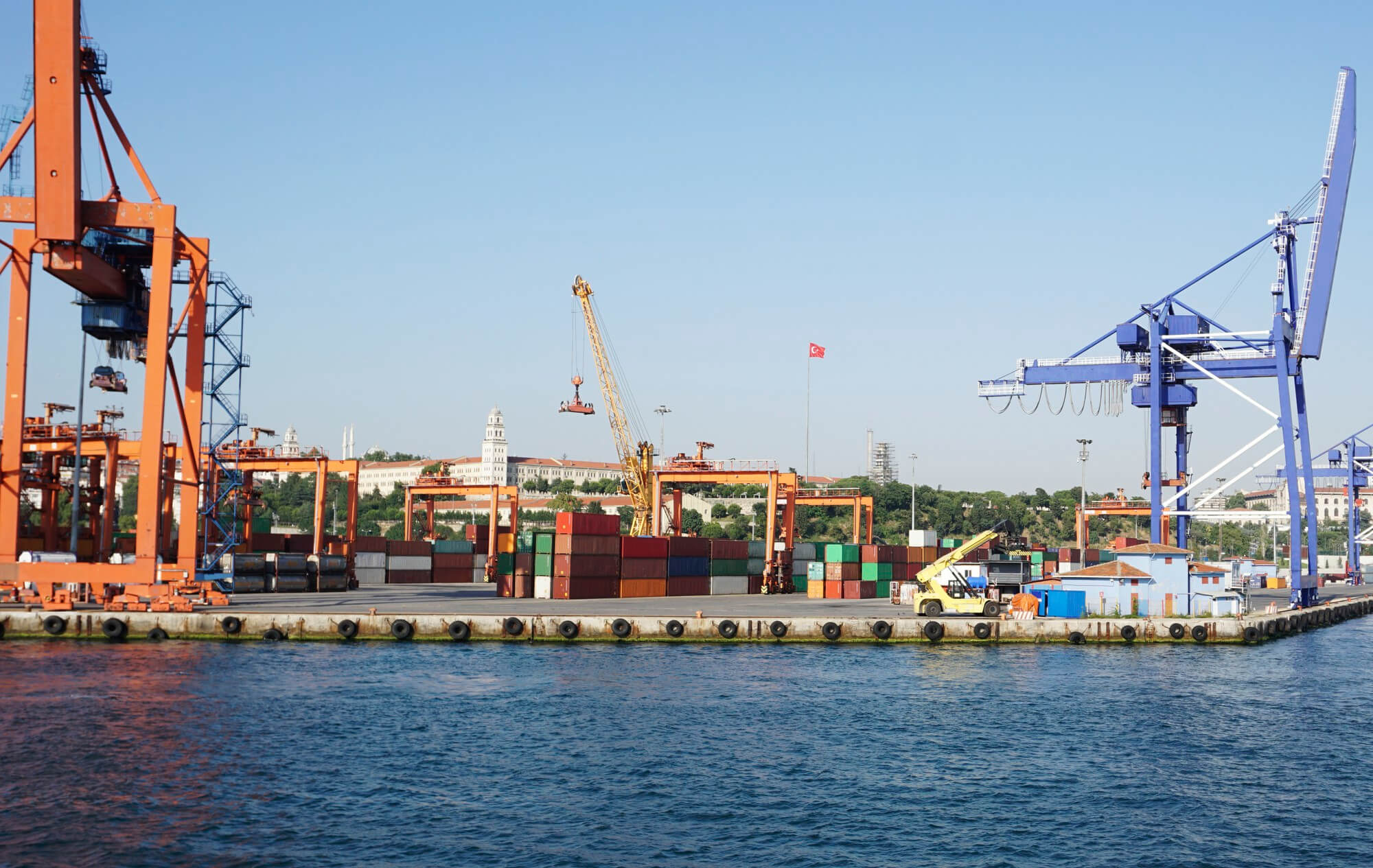
Gulf capital is most likely to enter Karachi through three specific channels. Port and logistics investment, attracted by Karachi Port’s strategic position on the Arabian Sea and the growing volume of Gulf-Pakistan trade. Financial services investment, building on Karachi’s existing banking and capital markets infrastructure to create deeper, more internationally connected financial markets. And large-scale urban real estate development, addressing the premium residential and commercial supply deficit in a city of 20 million people with a significant and growing upper-middle-class population.
The security improvements Karachi has experienced over the past decade have already begun attracting domestic investment back to the city. Gulf capital, which tracks risk perceptions closely, is beginning to follow. The trajectory is positive — the pace of transformation depends almost entirely on governance continuity.
Gwadar: The Long Game With the Highest Ceiling
No Pakistani city has a more dramatic theoretical upside from Gulf capital investment than Gwadar — and no Pakistani city requires more patience from investors willing to bet on it.
Gwadar’s strategic logic is undeniable. A deep-water port on the Arabian Sea, connected through CPEC infrastructure to China’s western provinces and Central Asia’s landlocked economies, sitting at the mouth of the Persian Gulf through which 20 percent of the world’s oil transits daily — the geographic argument for Gwadar as a major trade and logistics hub writes itself.
Gulf investors — particularly from the UAE, which understands the port economy model intimately — have already expressed serious interest in Gwadar. The announced Gulf-funded free zone developments, the interest from UAE port operators in Gwadar’s management, and the Saudi investment discussions around CPEC-adjacent projects all point toward genuine Gulf appetite for Gwadar exposure.
The honest caveat is the timeline. Gwadar’s transformation from a CPEC construction site into a functioning trade hub requires infrastructure completion, security stabilization in Balochistan, population growth, and the development of a genuine commercial ecosystem — all of which are decade-scale processes rather than five-year investment cycles.
For Gulf sovereign wealth funds with patient capital and long investment horizons, Gwadar is a generational position. For private capital seeking returns within a conventional investment cycle, it remains premature.
Lahore: The Consumer Economy Capital
Lahore is Pakistan’s cultural capital and its most dynamic consumer economy. A population of 14 million people, Pakistan’s strongest retail and hospitality sector outside Karachi, a thriving technology startup ecosystem, and a quality of life that consistently attracts Pakistan’s most talented professionals from across the country — Lahore’s fundamentals as a consumer economy hub are genuinely compelling.
Gulf capital is most likely to enter Lahore through consumer-facing sectors — retail, hospitality, food and beverage, healthcare, and education — rather than the industrial or financial sector plays more relevant to Karachi and Islamabad. Gulf retail and hospitality groups that have successfully expanded across the Middle East, North Africa, and Southeast Asia would find in Lahore a market with the population density, income growth trajectory, and brand appetite to support significant investment.
Lahore’s technology sector is a secondary but growing attraction. The city produces strong engineering talent and hosts a growing cluster of technology companies. Gulf corporate venture capital and growth equity investors looking for Pakistani technology exposure will find Lahore alongside Islamabad as the two most credible technology investment destinations in the country.
Faisalabad: The Industrial Opportunity Nobody Is Talking About
Faisalabad is Pakistan’s third-largest city and the undisputed center of its textile and manufacturing sector. It produces a significant share of Pakistan’s export earnings, hosts the country’s largest concentration of industrial capacity outside Karachi, and sits at the center of Punjab’s agricultural heartland.
It is almost entirely absent from conversations about Gulf investment destination cities — which is both a reflection of its current profile and an indication of the opportunity that profile obscures.
Gulf investors with manufacturing, industrial real estate, and supply chain interests — particularly those connected to Gulf retail groups sourcing apparel and home textiles — would find in Faisalabad an industrial base that is already producing at export scale, hungry for the capital investment required to upgrade its certification infrastructure and meet the compliance standards that premium international buyers require.
A Gulf-backed industrial park in Faisalabad — offering upgraded power infrastructure, international certification support, and export logistics connectivity — would transform both the city’s investment profile and Pakistan’s textile export trajectory simultaneously.
The City That Moves First Wins the Most
Economic hub status is not distributed equally across a country’s cities based on merit alone. It concentrates in the locations that move first — that create the credible infrastructure, the institutional framework, and the early investor success stories that attract the next wave of capital.
Islamabad has the strongest near-term case for Gulf financial and professional services capital. Karachi has the highest existing economic base to build from. Gwadar has the longest-term strategic upside. Lahore has the consumer economy momentum. Faisalabad has the industrial foundation that nobody is currently competing to upgrade.
Gulf capital does not need all of these cities to succeed simultaneously. It needs one credible entry point — one city that delivers on its promises, protects invested capital, and generates the returns that make the next investment decision easier than the first.
Whichever Pakistani city builds that credibility first will not just attract Gulf capital. It will attract everything that follows Gulf capital — Asian institutional investors, Western development finance, and the multinational corporations that locate wherever serious capital has already validated the environment.
The race has started. The cities that understand what is at stake are already positioning. The window for first-mover advantage is real — and it will not stay open indefinitely.