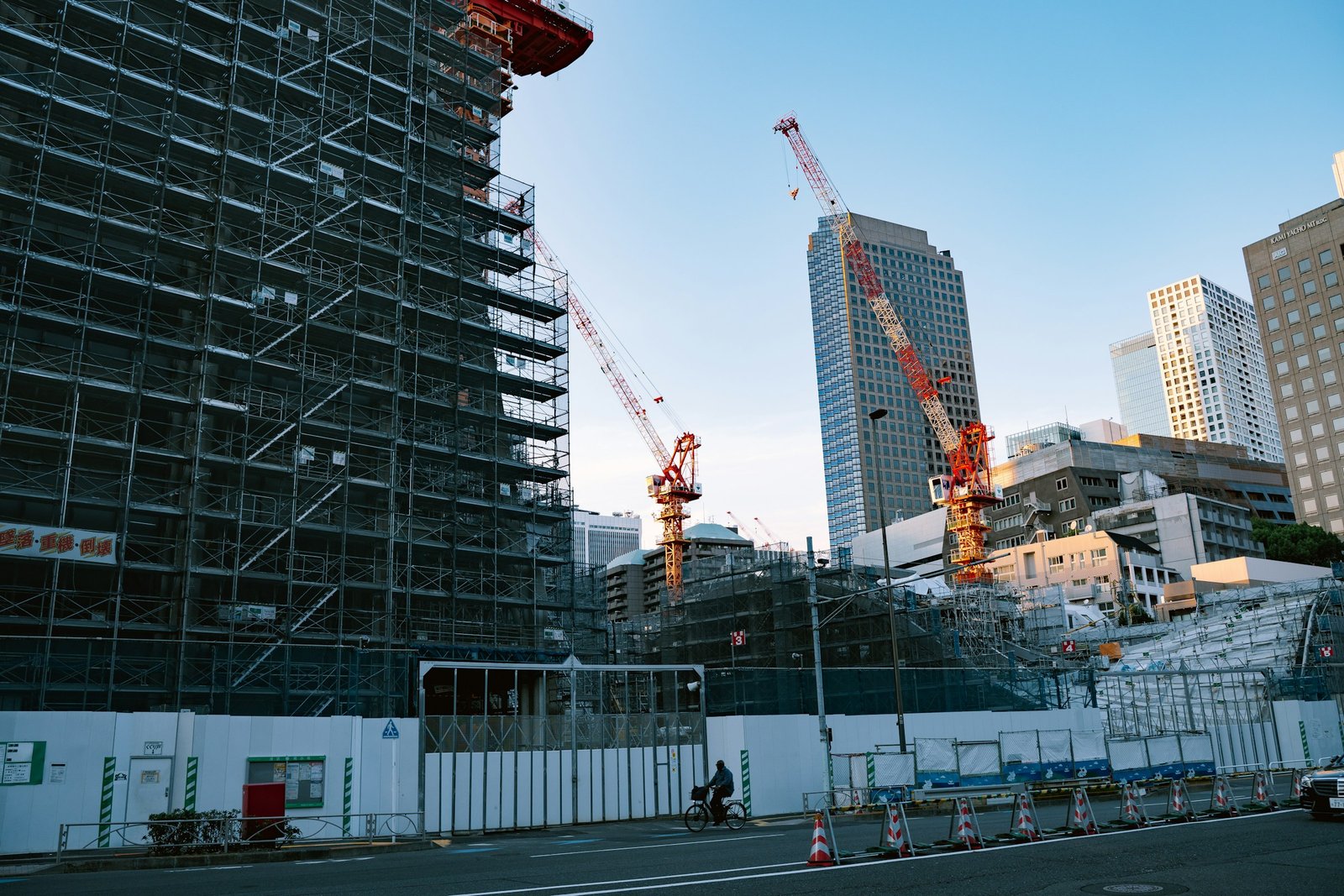
Pakistan’s federal government announced in August 2026 that it is extending the Defect Liability Period for public construction projects from one year to three years — with a stated long-term goal of reaching five years. The Federal Minister for Economic Affairs described the move as a step toward making contractors and consultants genuinely accountable for the quality of what they build.
The announcement reflects something that anyone who has bought, rented, or managed property in Pakistan already knows from experience. Construction quality in Pakistan is inconsistent, defects are common, and the period after handover is when the real quality of a building reveals itself — sometimes uncomfortably.
For private property buyers, landlords, and rental investors the government’s public sector policy announcement is less directly relevant than what it signals about the broader conversation around construction accountability. Here is what you actually need to know about construction defects in Pakistani properties and how to protect yourself.
What Is a Construction Defect and Why Does It Matter for Property Investors
A construction defect is any failure in a building’s design, materials, or workmanship that causes it to perform below a reasonable expected standard. In Pakistan’s private residential market defects range from the minor and cosmetic — poor paint finish, uneven tiling — to the structurally serious — inadequate waterproofing, foundation settlement, or substandard electrical installations.
The financial significance of construction defects in a rental property context is direct and compounding. A defect that goes undetected at purchase or tenancy commencement becomes a maintenance liability that eats into rental income. A serious defect discovered by a tenant generates complaints, requests for rent reduction, and in the worst cases early tenancy termination. A structural defect in a property offered for sale as an investment reduces its value below what the seller represented.
Understanding which defects to look for, which are the landlord’s responsibility, and which are warning signs serious enough to walk away from a deal entirely is knowledge that saves property owners significant money over the life of their investment.
The Most Common Construction Defects in Pakistani Properties
These are the defects that appear most frequently in Pakistan’s residential and commercial property market and that buyers and landlords should specifically investigate during any property inspection.
Waterproofing failures are the single most common and most damaging defect category in Pakistani construction. Roof leaks, damp basement walls, water ingress around windows, and bathroom waterproofing failures that allow moisture to penetrate floor and wall structures are endemic across Pakistan’s residential market — in new construction as much as older buildings. The consequences compound over time — structural damage, mould growth, ceiling and wall plaster deterioration, and ultimately expensive remediation that costs multiples of what proper waterproofing at construction stage would have cost.
When inspecting any property in Pakistan’s monsoon-affected climate look specifically at ceiling corners, bathroom floor and wall junctions, and the underside of roof slabs on the top floor. Water staining, efflorescence — the white crystalline deposits left by water moving through concrete — and soft plaster are all indicators of active or historical water ingress.
Electrical installation quality varies enormously across Pakistan’s residential construction market. Undersized wiring, inadequate earthing, and substandard consumer unit installations are common in properties built without strict supervision. For furnished rental properties where landlords provide electrical appliances the quality of the building’s electrical infrastructure directly affects both tenant safety and the longevity of expensive appliances.
Have a qualified electrician assess the electrical installation in any property you are seriously considering purchasing as a rental investment. The cost is negligible relative to the risk of inheriting an installation that requires complete rewiring — a cost that can run PKR 200,000 to PKR 500,000 on a medium-sized house.
Plumbing and drainage defects are the second most common maintenance source in Pakistan’s rental properties after waterproofing. Undersized drainage pipes that block frequently, hot water system installations that fail early, and water supply pipework that develops leaks within a few years of construction are all common in properties built to budget rather than to standard.
During any property inspection run every tap and flush every toilet. Check under sinks and behind toilets for evidence of past leaks. Ask about the history of plumbing problems during the current tenancy or ownership. A landlord or seller who has a ready answer about recurring plumbing issues is telling you something important about what you are about to inherit.
Structural cracks require careful interpretation. Hairline cracks in plaster are common in new construction as buildings settle and are usually cosmetic rather than structural. Wider cracks — particularly diagonal cracks at window and door corners, cracks that penetrate through to the other side of a wall, or cracks that have been filled and have reopened — indicate movement that may reflect foundation or structural problems requiring professional assessment before purchase.
Finishing quality is the category most visible to casual inspection and least significant for long-term investment performance. Poor paint finish, uneven tiling, badly fitted doors and windows, and inconsistent grouting are all indicators of general workmanship quality — and a property with poor finishing quality is likely to have similar quality standards applied to its less visible infrastructure. Use finishing quality as a proxy for overall construction supervision standards rather than as a problem requiring specific remediation.
The Defect Liability Principle and What It Means for Private Property Buyers
The government’s extension of the Defect Liability Period for public projects reflects a principle that has long existed in construction contracts — the idea that a contractor who builds something should remain responsible for defects that emerge in the period immediately after completion.
In Pakistan’s private residential market this principle exists in theory but is inconsistently applied in practice. New property purchases from developers typically include some form of defect warranty — often one year, sometimes longer for structural defects — but the enforceability of these warranties depends heavily on the developer’s willingness to honour them and the buyer’s ability to document and pursue defect claims effectively.
The practical reality for most property buyers in Pakistan is that defect warranty claims against developers are difficult to pursue and often unsatisfying in outcome. Developers have legal teams, buyers rarely do, and the Pakistani court system’s pace makes formal litigation a last resort that most buyers rationally avoid.
This means that the most effective defect protection available to a private property buyer in Pakistan is not a warranty clause in a sale agreement — it is a thorough physical inspection before purchase that identifies existing defects so they can either be remediated by the seller before completion or factored into the purchase price negotiation.
How to Conduct a Proper Property Inspection in Pakistan
A proper property inspection in Pakistan’s residential market goes significantly beyond the walk-through that most buyers conduct. These are the specific steps that protect buyers from the most expensive defect categories.
Visit the property on at least two occasions at different times of day. Properties can look very different in morning light versus afternoon. Visit once during daylight when natural light reveals surface conditions clearly and once after dark when the electrical installation can be properly assessed.
Bring a torch and inspect roof spaces, underfloor voids where accessible, and any areas that are not part of the main presented living space. Defects are most commonly concentrated in the areas that sellers or agents do not naturally direct a buyer’s attention toward.
Turn on every tap simultaneously and hold them running for three to four minutes. Observe water pressure, drainage speed, and whether the system maintains pressure under simultaneous demand. Hot water systems should be tested for both temperature and recovery time.
Ask directly about any past maintenance issues, water leaks, or electrical problems. In Pakistan’s property culture buyers are often reluctant to ask direct questions and sellers or agents are often reluctant to volunteer negative information. Asking directly changes the dynamic and creates a disclosure that has some practical significance even if not legally enforceable.
For any property where you are committing significant capital commission a professional structural survey. Qualified structural surveyors in Pakistan’s major cities charge PKR 30,000 to PKR 80,000 for a residential property survey — a cost that represents less than 0.2 percent of most investment property values but can identify defects worth ten to fifty times the survey cost.
Defect Liability in Landlord-Tenant Relationships
For existing rental property owners the question of defect liability takes a different form. Which defects are the landlord’s responsibility to remedy and which are the tenant’s?
Pakistan’s rental law does not establish a detailed statutory framework for this question — most landlord-tenant relationships in the country are governed by their lease agreement terms, with significant variation between what different leases say and what local custom expects.
The general principle that applies in Pakistan’s rental market practice is that structural and infrastructure defects — roof leaks, major plumbing failures, electrical system problems, and foundation or structural issues — are the landlord’s responsibility to remedy. Cosmetic wear, minor maintenance, and damage caused by the tenant’s own use are the tenant’s responsibility.
A professionally drafted lease agreement defines these boundaries clearly — specifying which categories of maintenance fall to each party, what notice process applies to maintenance requests, and what timelines the landlord commits to for different categories of repair. Ambiguity in this area is one of the most common sources of landlord-tenant disputes in Pakistan’s rental market.
Why Bahria Town and DHA Properties Have Better Construction Accountability
One of the less discussed advantages of purchasing property in Bahria Town and DHA relative to independent construction projects is the community management structure that creates ongoing accountability for construction quality standards.
Bahria Town’s community management team enforces construction specifications within the development and provides a channel for residents to report defects in common infrastructure. DHA’s institutional management creates similar accountability mechanisms. Neither system is perfect but both provide a layer of oversight and recourse that buyers of independently constructed properties in informal or semi-formal residential areas do not have.
For rental property investors this institutional layer of construction oversight reduces — without eliminating — the risk of inheriting severe construction defects in premium community properties relative to equivalent purchases outside these communities. It is one of several reasons why the investment premium for Bahria Town and DHA properties is justified beyond their more visible infrastructure and security advantages.
The Construction Development Bank Proposal and What It Could Mean
The government’s announcement also included a proposal to explore the feasibility of establishing a dedicated Construction Development Bank — a specialised financing institution for the construction sector. The minister directed the finance ministry to begin consultations with the State Bank of Pakistan and the Pakistan Banks Association on banking challenges faced by construction firms.
If established, a dedicated Construction Development Bank would in theory improve the financing available to construction companies — reducing the cashflow pressures that are one of the most common causes of construction quality shortfalls in Pakistan. When contractors and developers run short of working capital during a project the consequences often show up directly in material quality substitution and supervision shortcuts that produce exactly the defects described in this guide.
The practical impact of this proposal on actual construction quality in Pakistan’s private residential market is genuinely uncertain and will depend entirely on implementation details that have not yet been developed. It is a policy direction worth watching but not one that changes the immediate practical calculus for property buyers conducting due diligence on specific properties right now.
What This Means for Your Next Property Decision
The government’s move to extend contractor liability periods for public projects is a signal that the regulatory environment around construction quality in Pakistan is moving in the right direction. Whether that signal translates into meaningfully improved construction standards in the private residential sector — and on what timeline — remains to be seen.
What does not require waiting is the practical protection available to every property buyer and investor right now through thorough pre-purchase inspection, professional survey for higher-value acquisitions, clearly drafted lease agreements that specify maintenance responsibilities, and the preference for properties in communities with institutional construction oversight where available.
Construction defects are a manageable risk in Pakistan’s property market — not an unavoidable one. The buyers and investors who manage this risk well are the ones who inspect thoroughly, document carefully, and work with verified agents and management companies whose professional reputation depends on the quality of what they recommend.
T2R helps property buyers in Islamabad and Rawalpindi conduct thorough due diligence before purchase and manages rental properties professionally — including maintenance coordination through vetted contractors, regular property inspections, and documented condition reporting that protects landlords throughout every tenancy.
📞 +92-327-5590760
📍 4th Floor, Bunyad Plaza, Bahria Town, Islamabad
🌐 time2rent.net/property-management
Verified properties. Professional inspections. Protected investment. That is T2R.